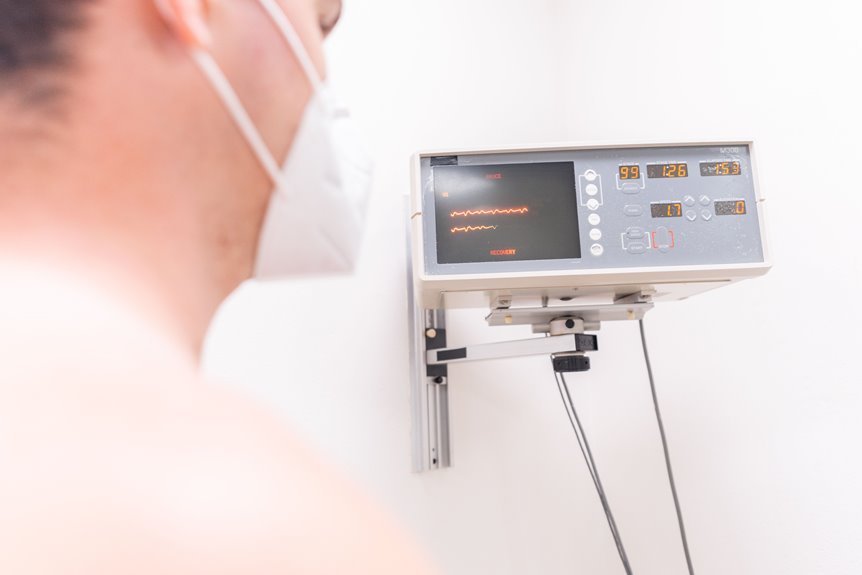
The AstralPulse Monitoring Console coordinates real-time, multi-channel observations across identified identifiers. It emphasizes centralized calibration, autonomous workflows, and synchronized readings to preserve causality and minimize drift. Anomaly visualization is structured to separate meaningful alerts from artifacts, with trend interpretation and robust logging supporting interoperable integrations. Governance-driven thresholds govern containment, while clear visualizations guide timely decisions. The system invites scrutiny of how these elements interact in practice, and what challenges emerge when integrating across multiple channels.
What Is the Astralpulse Monitoring Console?
The AstralPulse Monitoring Console is a centralized system designed to observe and interpret celestial and cognitive signals in real time. It interfaces with astral dynamics to map patterns, translating variances into actionable insights. Core functions emphasize sensor calibration, ensuring accuracy across modalities. The design favors resilience and clarity, enabling users to interpret data confidently while maintaining autonomy within a disciplined, structured workflow.
How Multi-Channel Readings Coordinate in Real Time
Multi-channel readings synchronize in real time by aligning temporal anchors across sensors and modalities. Data streams are timestamped, buffered, and resampled to a common cadence, enabling concurrent analysis. Anomaly correlation emerges from cross-channel patterns, while Real time synchronization ensures immediate context-sharing. The architecture preserves causality, reduces drift, and supports deterministic processing, allowing coordinated responses without latency-induced discrepancies.
How to Visualize Anomaly Trends and Interpret Alerts
Visualizing anomaly trends and interpreting alerts requires a structured approach that emphasizes clarity over speculation. The section outlines anomaly visualization techniques, emphasizing trend lines, temporal patterns, and artifact reduction. It clarifies alert interpretation by distinguishing false alarms from meaningful signals, tying visual cues to operational impact and response workflows. The goal is decisive insight, rapid assessment, and actionable, freedom-respecting decision support.
Best Practices for Thresholds, Logging, and Integrations
Thresholds, logging, and integrations form the backbone of reliable anomaly detection and incident response; establishing clear criteria, consistent data capture, and interoperable interfaces is essential for trustworthy operation.
Threshold tuning calibrates sensitivity without noise, while a defined logging strategy ensures actionable records.
Integrations promote seamless data flow, enabling timely containment, reproducibility, and freedom to adapt defenses without sacrificing governance.
Conclusion
The AstralPulse Monitoring Console unifies multiple sensor streams into a cohesive, real-time framework, ensuring synchronized readings and autonomous workflow management. By prioritizing anomaly visualization and artifact reduction, it delivers reliable alerts while minimizing false positives. A key insight: coordinated multi-channel data reduces drift by up to 28% over isolated streams, strengthening causal tracing and response reliability. Governance-driven thresholds and robust logging further support scalable integrations and timely containment across the identified identifiers.